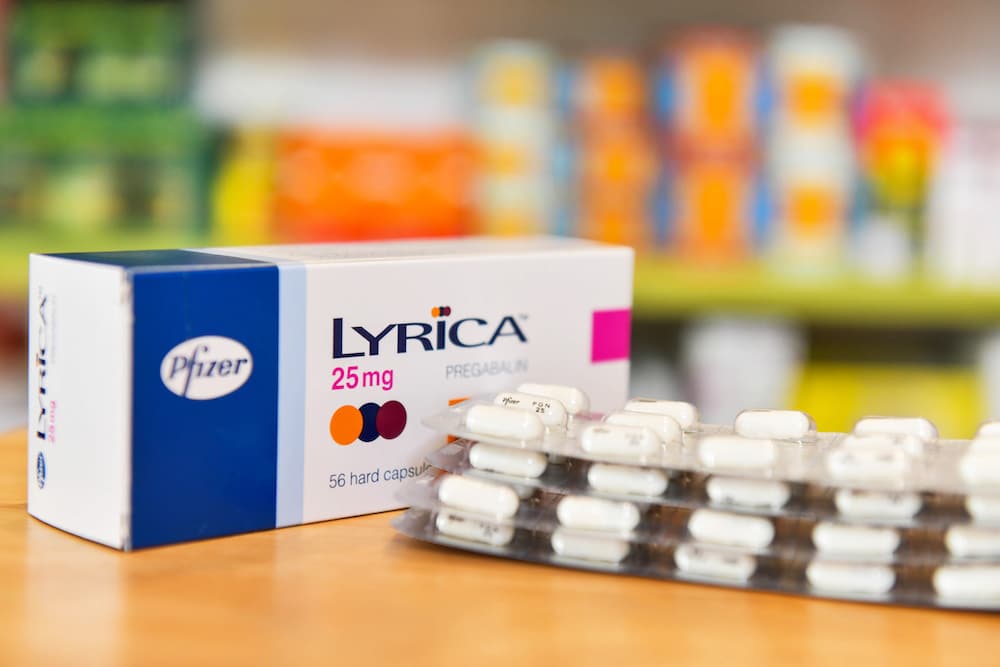
Saudi Arabia has strengthened its legal and regulatory controls over narcotic drugs and psychotropic substances, including pregabalin, the active ingredient in Lyrica, which is classified as a controlled prescription medication.
In this article, we explain the penalties associated with unlawful possession of Lyrica in Saudi Arabia, distinguish between possession for personal use and possession with intent to distribute, and examine the relevant legal defenses, aggravating circumstances, and supplementary penalties under Saudi law.
Legal Classification of Lyrica in Saudi Arabia
Pregabalin, commonly sold under the brand name Lyrica, is a controlled psychotropic substance in Saudi Arabia and is subject to the applicable schedules and regulations governing narcotic drugs and psychotropic substances.
The relevant classification includes Schedule II, Category E, which covers certain substances controlled at the national level.
This classification has several legal and regulatory implications:
- Restrictions on Distribution: Pregabalin may only be prescribed, dispensed, possessed, and distributed in accordance with the applicable medical and regulatory requirements.
- Legal Consequences of Unauthorized Possession: Possession without lawful medical authorization may expose an individual to legal proceedings, depending on the circumstances and the applicable statutory provisions.
- Pharmacy and Healthcare Oversight: Healthcare facilities, pharmacies, and authorized distributors are subject to regulatory controls intended to prevent unauthorized distribution and diversion into illicit markets.
The Role of the Saudi Food and Drug Authority and the Anti-Narcotics Law
Saudi Arabia’s regulatory and legal framework combines pharmaceutical oversight with criminal enforcement.
- Saudi Food and Drug Authority (SFDA): The SFDA regulates the authorization, importation, distribution, and dispensing of pregabalin-containing medicines. These medicines are subject to controlled prescription requirements and applicable inventory and recordkeeping obligations.
- Law of Combating Narcotic Drugs and Psychotropic Substances: This Law establishes criminal penalties based on the nature of the prohibited conduct and the offender’s intent, including possession for personal use or possession with intent to distribute. It also provides treatment-related protections in certain circumstances for individuals who voluntarily seek assistance for substance use disorders, subject to the applicable statutory conditions.
Difference Between Possession and Consumption in Drug Cases
| Comparison |
Drug Consumption |
Drug Possession |
| Definition and Physical Act |
Introducing a narcotic drug or psychotropic substance into the body through swallowing, inhalation, or another method of administration. |
Having physical possession or effective control of the substance, whether in a pocket, vehicle, or residence, without necessarily consuming it at the time of the incident. |
| Legal Evidence |
May be established through forensic laboratory findings, medical evidence, and other admissible evidence, depending on the case. |
May be established by the discovery of the substance within the accused person’s possession or control, together with evidence of the required knowledge and criminal intent. |
| Legal Treatment and Penalties |
Personal-use offenses are subject to the applicable statutory provisions, including Article 41, and any relevant treatment-related procedures. |
The applicable legal classification and penalties depend on the nature of the possession and the proven intent, including possession for personal use or distribution. |
Types of Drug Possession
- Simple Possession: Possession of a controlled substance where the accused has physical control and the required knowledge, but the evidence does not establish a specific intent to consume or distribute it. The applicable legal consequences depend on the statutory classification of the conduct and the facts established before the court.
- Possession for Personal Use: Possession of pregabalin for the purpose of personal consumption. Relevant evidence may include the quantity involved, the circumstances of possession, and available forensic or medical findings. No single factor necessarily determines intent.
- Possession with Intent to Distribute or Traffic: Possession of a controlled substance with the intention of selling, supplying, or distributing it to others. The court evaluates the surrounding circumstances and evidence when determining whether the required intent has been established.
Penalties for Possessing Lyrica in Saudi Arabia
The penalties for unlawfully possessing Lyrica without the necessary medical authorization vary according to the nature of the conduct, the applicable statutory provisions, and the facts of the case.
Penalty for Possessing Lyrica for Personal Use
- Imprisonment: Under Article 41 of the Law of Combating Narcotic Drugs and Psychotropic Substances, qualifying offenses committed for personal use may be punishable by imprisonment for a period of six months to two years, subject to the relevant statutory provisions and the court’s authority to consider applicable mitigating circumstances.
Supplementary Penalties for Unlawful Possession of Lyrica
- Saudi Nationals: Under Article 56, a Saudi national convicted of an offense covered by the relevant statutory provisions may be prohibited from traveling outside the Kingdom after completing the prison sentence. The travel ban generally lasts for a period equivalent to the imprisonment term, but not less than two years. The Minister of Interior may authorize travel in circumstances of necessity.
- Non-Saudi Nationals: Under Article 56, a non-Saudi national convicted of a qualifying offense may be deported from Saudi Arabia after serving the sentence and prohibited from returning, subject to the statutory exceptions applicable to Hajj and Umrah.
Aggravating Circumstances for Possession of Lyrica for Personal Use
Article 41 provides for increased penalties in certain circumstances, including:
- Where the offender is responsible for supervising, regulating, or combating narcotic drugs or psychotropic substances.
- Where the offender’s employment involves direct responsibilities relating to the possession or handling of such substances.
- Where the offender uses the controlled substance or is under its influence while performing work duties.
Aggravating Circumstances for Lyrica Possession
Penalties for Possessing Lyrica with Intent to Distribute or Traffic
Possessing pregabalin with the proven intention of selling or distributing it unlawfully may result in substantially more severe criminal penalties.
Under Article 38 of the Law of Combating Narcotic Drugs and Psychotropic Substances, qualifying trafficking or promotion offenses may be punishable by imprisonment for five to fifteen years, together with other penalties prescribed by law.
- Distinguishing Personal Use from Distribution: The court assesses the evidence as a whole when determining whether possession was intended for personal consumption or distribution. The quantity involved and other circumstances may be relevant, but quantity alone does not automatically establish an intention to traffic or promote the substance.
Aggravating Circumstances for Distribution and Trafficking
The applicable statutory provisions provide for increased penalties in specified circumstances.
Relevant factors may include:
- Repeat Offenses: Committing another qualifying offense after a previous conviction, where the statutory conditions for repeat offending are satisfied.
- Official Position: Where the offender is a public official or has responsibilities connected with drug control and enforcement.
- Organized Criminal Activity: Participation in organized trafficking networks or qualifying criminal activity associated with international offenses.
- Use or Possession of Weapons: Circumstances involving weapons that satisfy the applicable statutory aggravating provisions.
- Location of the Offense: Committing qualifying offenses in places such as mosques, educational institutions, or correctional facilities.
- Involvement of Minors: Circumstances involving the exploitation of children or other vulnerable persons, where covered by the relevant legal provisions.
- Premises Used for Drug-Related Activities: Organizing or operating premises for prohibited drug-related activities where the statutory conditions are established.
The legal significance of each factor depends on the specific offense and the provision under which the accused is charged.
Legal Defenses: Confessions and Requests for Leniency in Lyrica Cases
In cases involving unlawful possession of Lyrica for personal use or possession without an established intent to distribute, a criminal defense lawyer may assess several legal arguments and requests for appropriate relief.
These may include:
- Request for Leniency: Submitting a reasoned request asking the court to consider the accused person’s family circumstances, employment, criminal record, and other relevant factors, particularly in a first-offense case. Depending on the law and circumstances, the defense may request a reduced sentence or another legally available measure.
- Judicial Confession: A confession may be considered alongside the other evidence and circumstances of the case. A voluntary and legally valid admission may be relevant to sentencing, but it does not automatically establish entitlement to a reduced penalty, acquittal, or treatment-based alternative.
- Challenging Arrest and Search Procedures: Reviewing whether the arrest and search complied with the Saudi Law of Criminal Procedure and other applicable requirements. Where an unlawful procedure has occurred, the defense may challenge the relevant evidence or seek the legal consequences available under the circumstances.
Does Lyrica Appear in Drug Tests?
Pregabalin, the active ingredient in Lyrica, can be detected through laboratory tests specifically designed to identify the substance.
However, it is not necessarily included in conventional rapid drug-screening panels, which commonly test for a limited range of substances.
The detection period varies according to several factors, including the type of test, the laboratory method, the amount taken, the frequency of use, and kidney function.
Some sources describe approximate detection periods of two to five days in urine and 24 to 48 hours in blood, but these figures should not be treated as definitive or universally applicable. A qualified laboratory or medical professional should be consulted when interpreting an individual test result.
Frequently Asked Questions About Lyrica Possession in Saudi Arabia
How Long Is the Prison Sentence for Possessing Lyrica?
The applicable sentence depends on the offense established by the evidence and the relevant statutory provisions.
Where unlawful possession for personal use falls under Article 41, the statutory imprisonment range is generally six months to two years, subject to applicable exceptions, mitigating provisions, and judicial assessment.
Cases involving consumption without the seizure of tablets must be evaluated separately according to the available evidence and the offense charged.
Can Lyrica Be Dispensed by Ordinary Commercial Pharmacies?
Pregabalin is a controlled prescription medicine in Saudi Arabia and cannot lawfully be dispensed without complying with the applicable authorization and prescription requirements.
Only healthcare facilities or pharmacies authorized under the relevant regulations may dispense it, and the applicable prescribing restrictions must be observed.
What Happens When a Saudi Military Service Member Is Convicted of a First Drug Offense?
A military service member convicted of a drug-related offense may face criminal penalties under the applicable law, as well as disciplinary or employment-related consequences under the regulations governing military service.
Whether dismissal is mandatory depends on the nature of the conviction, the applicable military service rules, and the circumstances of the case.
A first offense does not automatically eliminate criminal liability, although relevant mitigating circumstances may be considered where permitted by law.
If you need legal advice concerning a Lyrica possession charge or another drug-related criminal matter, you can Request a Legal Consultation or Contact Us on WhatsApp.
Get a Legal Consultation for Only SAR 200 Instead of SAR 600
Contact a Specialized Lawyer Now